The Pitman Collection
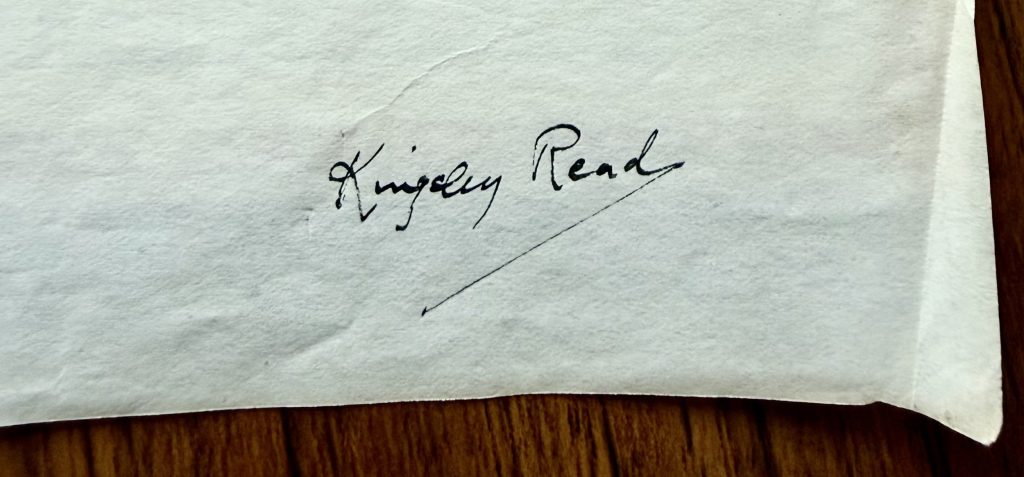
Back in the beginning of April, I found myself in Europe with nothing to do. Some plans had fallen through. The obvious thing to do – rebook my return flight to the States – was not going to happen: the rebooking fees were preposterous due to the crisis in the middle east that was erupting.
With the unexpected windfall of some time to myself, I decided to travel to England, to visit the University of Bath’s library, home of the Pitman Collection. The collection is an archive of correspondence and other documents belonging to and pertaining to three generations of the Pitman family: from Sir Isaac Pitman (1813-1897), of Pitman short-hand fame, to his grandson, Sir James Pitman (1901-1985), the tireless spelling reformer and educationalist. My interest in the collection of course stemmed from Sir James’s role in the development of the Shavian alphabet. Section D of the collection contains troves of correspondence between Sir James, Bernard Shaw, Kingsley Read, and everybody else involved in the story that culminated in the publication of the Shavian Alphabet edition of Androcles and the Lion in November 1962.
I had been in correspondence with Lizzie Richmond, the incredibly accommodating head archivist, and was able to make an appointment to spend the day with them to peruse as much of section D’s as I could in the limited time available. In the course of the day, I photographed as much material as I possible could, barely having the time to stop and admire the calligraphic gems littered between the cornucopia of letters, manuscripts and printers proofs. And I barely scratched the surface… while I had cherry-picked the folders that were most interesting to me, I think I could have happily spend another two full days to ‘complete’ my own collection.
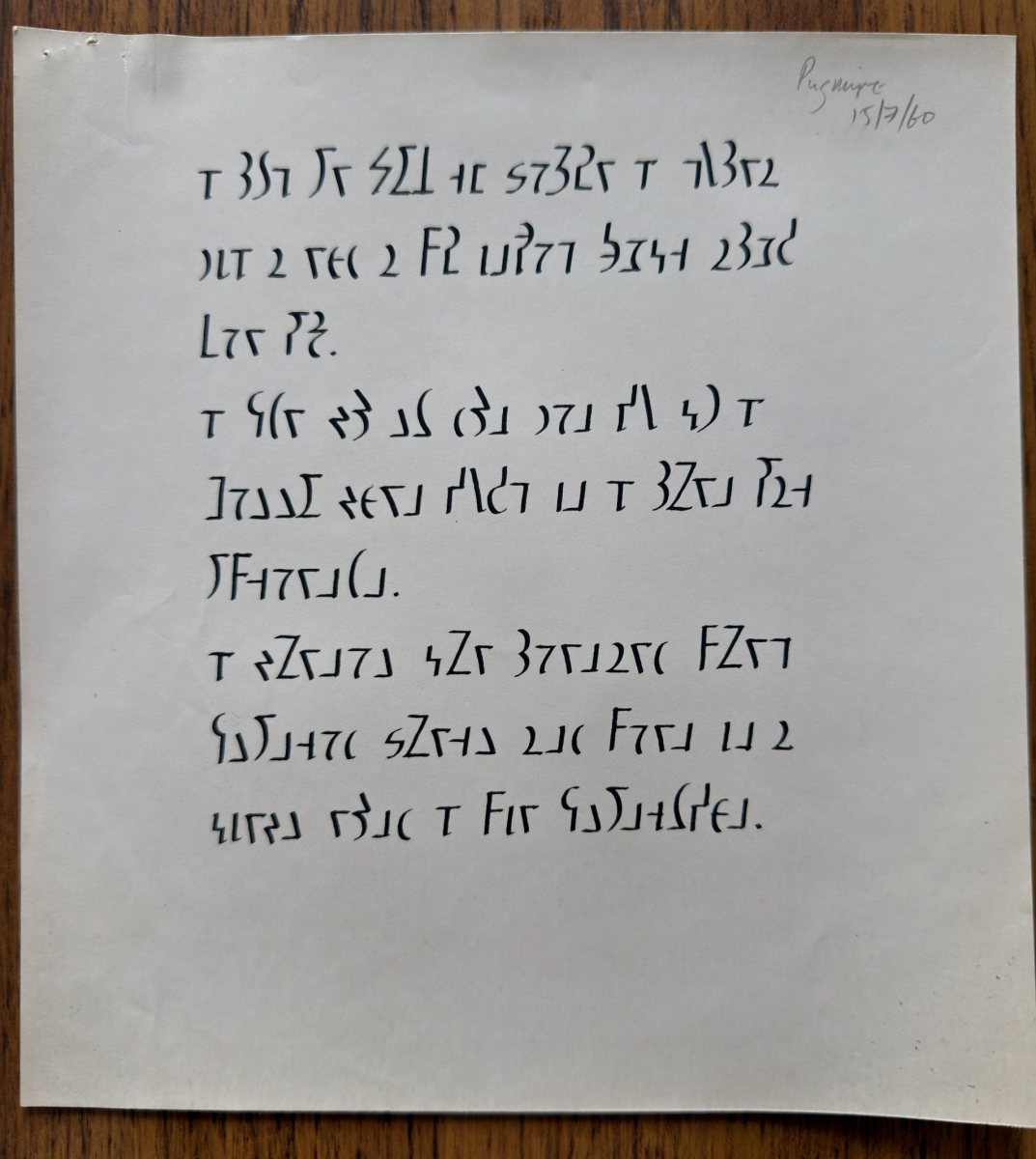
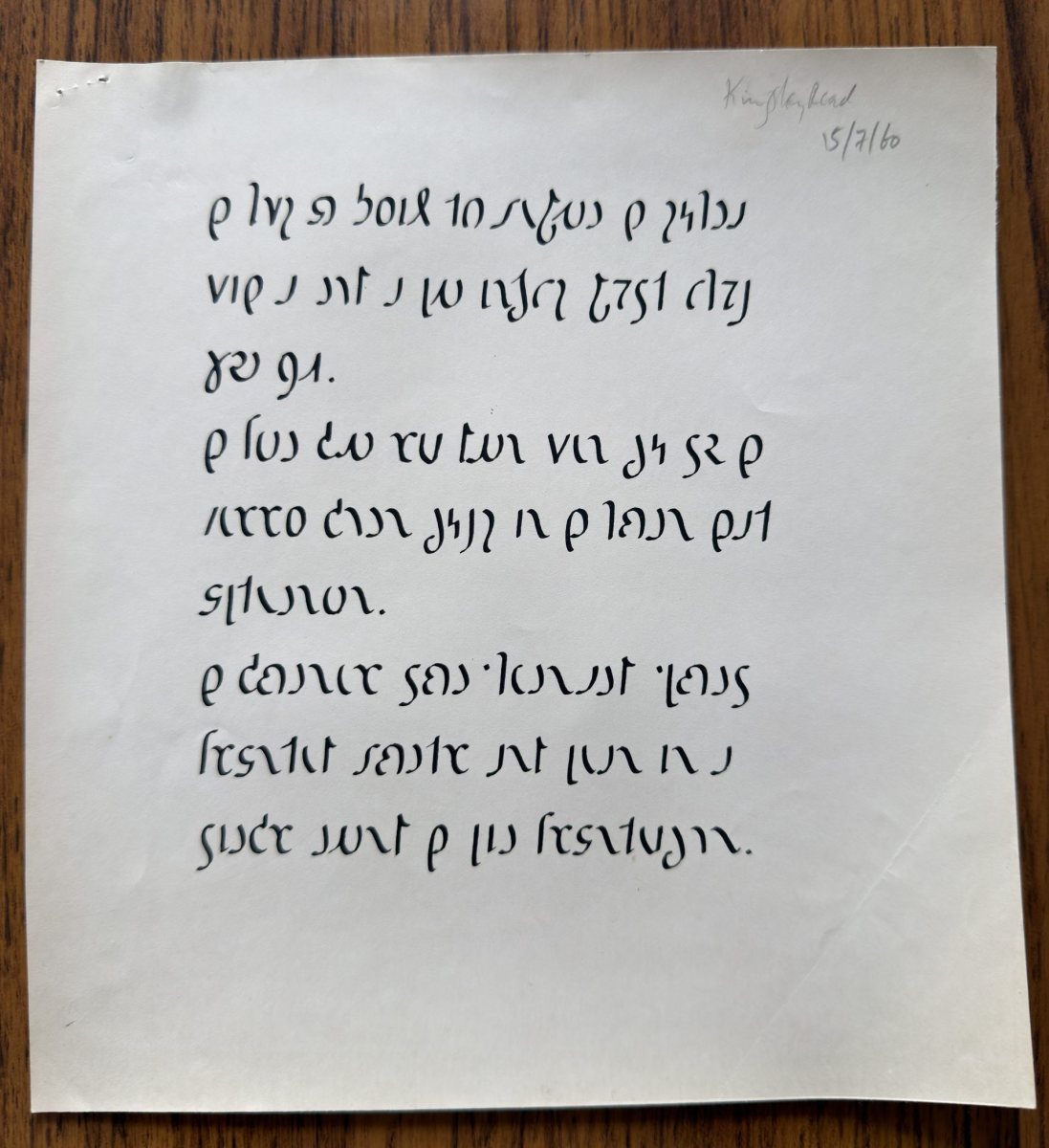
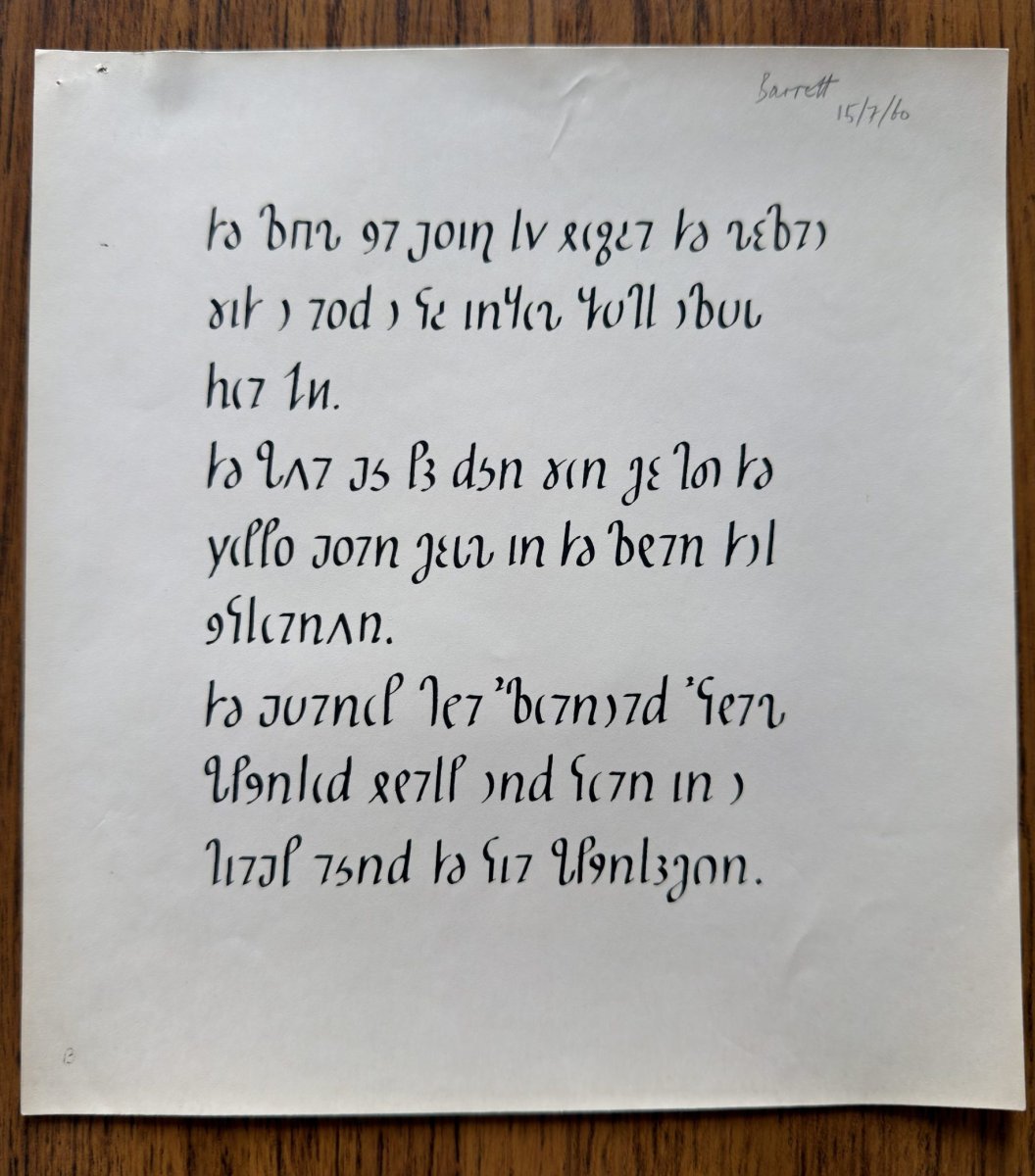
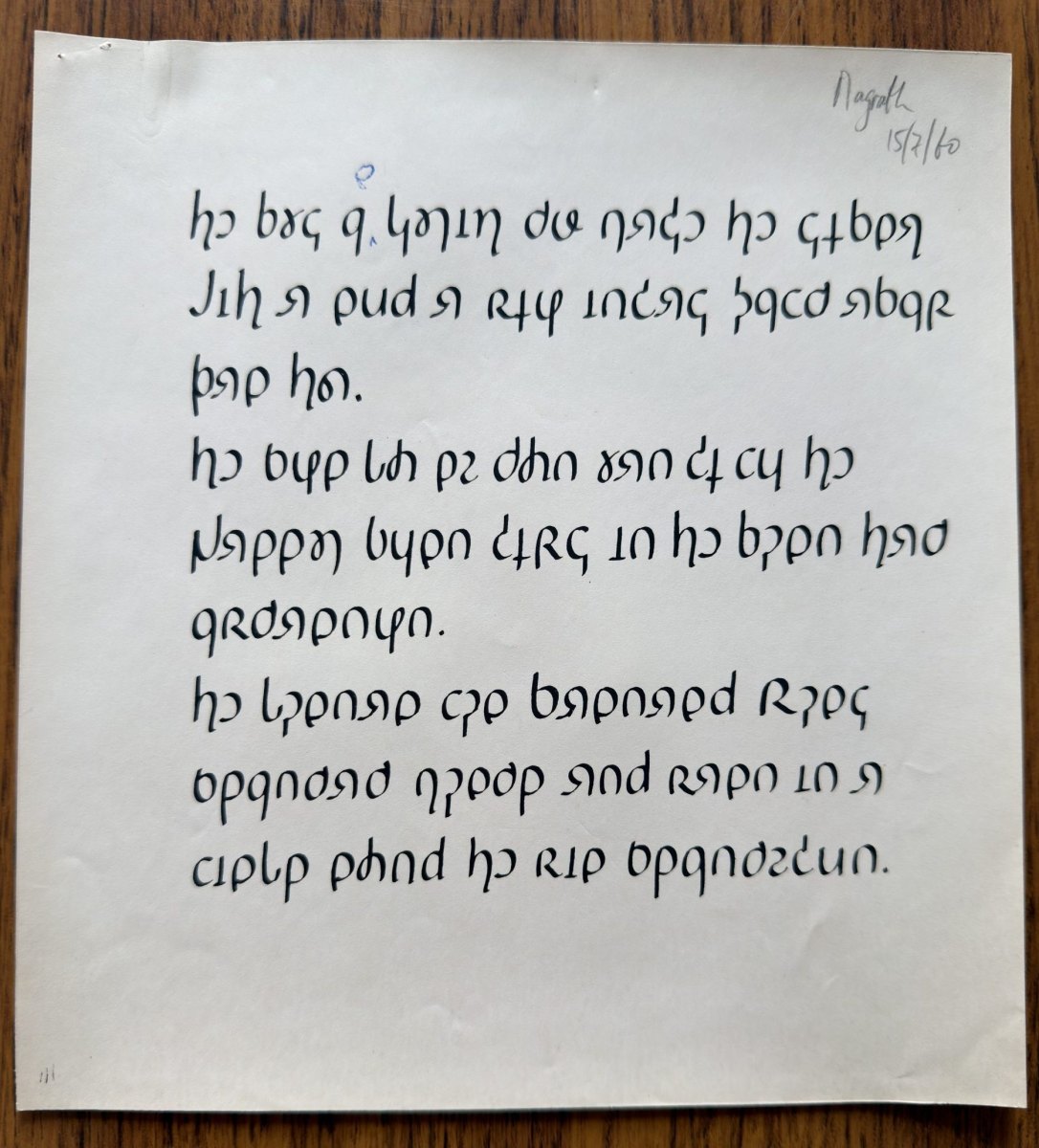
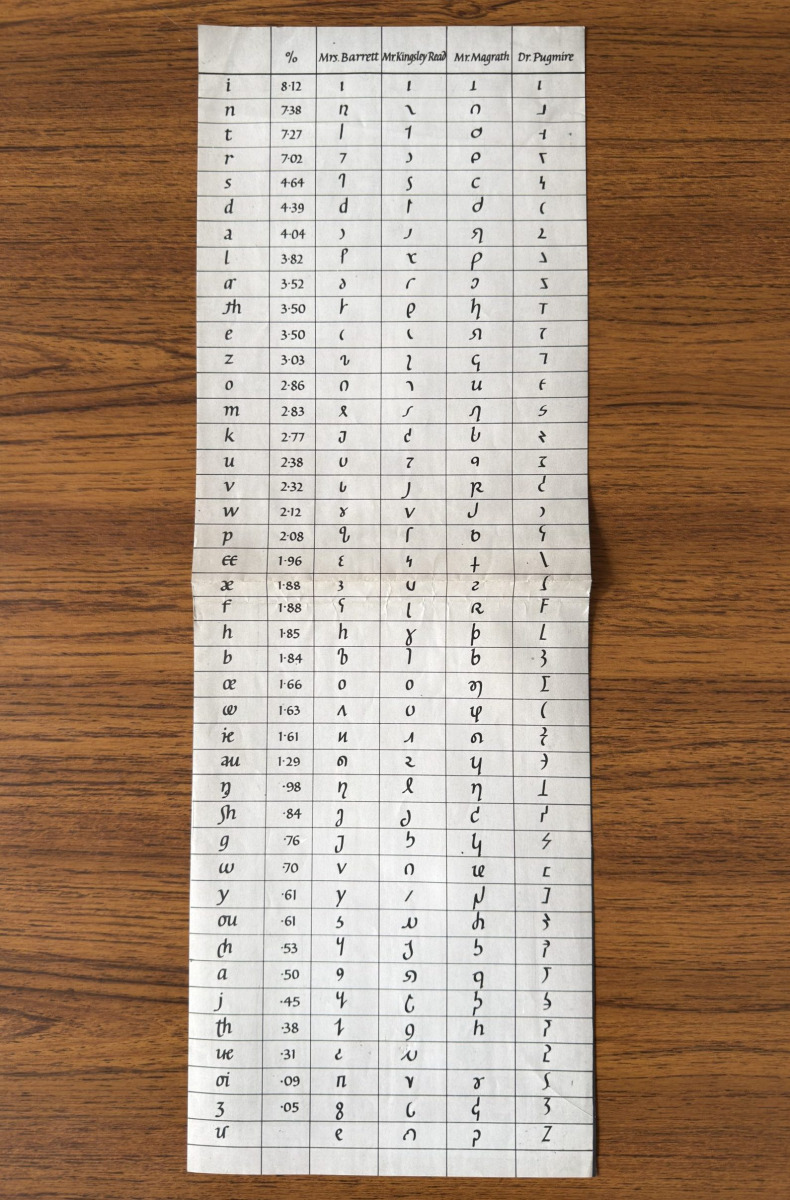
Calligrapher’s interpretation of the four finalists’ final proposals for the “Proposed British Alphabet”. It’s fascinating to see how the initial designs were cross-seminated.
It will take me a long time to process the documents I did copy. I have by now read most of the letters, and have learned a lot about the main topics I was looking to find out about: how the Shavian alphabet evolved from it’s early ‘Sound Spell’ beginnings (1942) to the final form published in the Shavian edition of Androcles and the Lion (1962); what the judges wanted the contestants to change, how the four finalists collaborated, and how that process effected the final version of the script; how the Shavian spelling principles were established. And the topic closest to my heart: how the typefaces were developed for the typesetting of Androcles, and for the Imperial Good Companion typewriters. Along the way, I learned a lot about the roles that others played in the development of the alphabet: Barbera Smoker, Peter MacCarthy, the Public Trustee, the Foundry and “the Penguins”.
I will be reporting here on the stories I unearthed in due course, along with images of some of the more intriguing manuscripts.
That was the Monday, that was Bath. I also had been in correspondence with the archivists at MERL – the Museum of English Rural Life, in Reading, about visiting the Kingsley Read collection. Guess what I did on Tuesday?


Leave a Reply